Monthly Archives: November 2026

how veterinary medicine manufacturing work

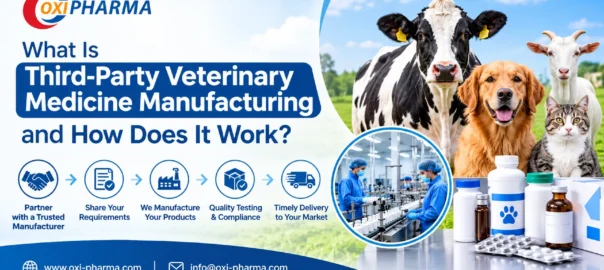
What Is Third-Party Veterinary Medicine Manufacturing and How Does It Work?

Third party veterinary medicine manufacturing lets vet pharma companies launch products without setting up and validating their own factories. Choosing the right manufacturing partner is more than cost. It determines product quality, compliance, and safety.

May be you are looking to run a vet pharma brand. Or you may just wonder how third party veterinary medicine manufacturing works. Either way, this post covers everything you want to know: what a third-party veterinary medicine manufacturing is, how it works, and different types of veterinary medicine manufacturers in India. Let’s get started.

What are Veterinary Medicine Manufacturers in India?

In third-party veterinary medicine manufacturing, you, as a veterinary pharma company, outsource the production of medicines to a manufacturer that already runs a licensed plant. The manufacturer makes the products. You own the brand, sell the products and build the market.

This model lets a business sell medicines under its own brand name without owning a manufacturing plant. The brand name, logo and label belong to the client, while the plant, machinery and trained staff belong to the manufacturer.

For startups and small distributors, it is often the quickest and most practical way to enter the veterinary market.

How Does Third-Party Veterinary Medicine Manufacturing Work?

The process follows six stages, from choosing a third party veterinary medicine manufacturer to receiving finished stock.

Selecting a Veterinary Medicine Manufacturer

The first step is to do market research to find a potential veterinary pharmaceutical manufacturer.

Businesses assess manufacturers on their industry experience, product portfolio, WHO-GMP and ISO certifications, regulatory history, and technological capabilities to ensure they can consistently meet operational requirements.

Finalising the Product Range

Once a manufacturer of veterinary medicines is chosen, the brand owner selects the types of veterinary products to be manufactured.

Most businesses consider products for livestock, poultry, pets and other animals, and begin with the categories that sell steadily in their region.

Discussing Formulations and Packaging

Both parties then agree on the formulations, strengths, dosage forms and packaging options. This is also the stage to discuss branding and labelling requirements so that the pack carries your name and design.

Placing the Manufacturing Order

Next, verify product quantities, minimum order requirements, pricing, and delivery timelines. The client and manufacturer also fill in all the necessary paperwork and business formalities before production starts.

Manufacturing and Quality Testing

Quality checks are performed at various levels, from screening of the raw material to in-process testing, testing of the final product for purity and microbiological safety and documentation of batch records.

Packaging and Product Delivery

Products are packed and labelled in the agreed brand name.

The finished goods are then delivered to the customer, who takes care of distribution and marketing.

What Are the Different Types of Veterinary Drug Manufacturers in India?

Veterinary pharma businesses usually choose from three manufacturing models. The right one depends on whether you already have formulations, want ready-made products, or need something developed for you.

Model Who Provides the Formulation Who Sells the Product Best Suited For
Contract Manufacturing Provided or approved by the client The client, under its own brand Established businesses outsourcing production
Private Label Manufacturing The manufacturer has ready-made formulations to choose from The client, under its own brand Startups, distributors and veterinary pharma companies
Custom Product Manufacturing Creating according to the client’s requirements The client, under its own brand Businesses that want a differentiated portfolio

Veterinary Contract Manufacturing

The client provides or approves proprietary formulations, and the manufacturer produces the batch strictly to those exact technical specifications.

Private Label Veterinary Manufacturing

In private label manufacturing, the manufacturer offers ready-to-manufacture veterinary formulations. The client selects products from the range and markets them under its own brand name.

Startups, distributors and veterinary pharma companies often prefer this route because it saves time and avoids development work.

Custom Veterinary Product Manufacturing

Here, the products are developed according to specific business requirements. The client and manufacturer discuss customised formulations, strengths, dosage forms and packaging before production starts.

Custom manufacturing helps a business build a portfolio that competitors do not offer, which makes its brand easier to remember in the market.

What Medicines are Produced by a Third Party Veterinary Medicine Manufacturer?

Businesses can outsource almost every common veterinary dosage form. The table below lists the main categories.

Dosage Form What It Covers
Veterinary tablets and boluses Solid oral doses, including large boluses for cattle and other big animals
Veterinary capsules Oral capsules for companion animals and other species
Oral liquids and syrups Palatable liquid formulations for different animal species
Veterinary injections Sterile injectable medicines for faster treatment
Powders and premixes Medicinal and nutritional powders and premixes, often added to feed or water.
Veterinary ointments and creams Topical products for skin care and wound healing
Animal feed supplements Nutritional supplements that support growth and productivity

Oxi Pharma manufactures all of these dosage forms at its WHO-GMP certified facility in Dehradun, Uttarakhand. Its range serves livestock, poultry and companion animals, and businesses can choose ready products or ask for formulations made to their own requirements.

Benefits of Working with Animal Medicine Manufacturers in India

Partnering with established animal medicine manufacturers in India allows businesses to launch their own veterinary product range without investing in a manufacturing facility. From production to quality standards, the manufacturing partner manages the essential processes, helping businesses focus on marketing, distribution, and growth.

No Need to Invest in a Manufacturing Facility

Setting up a plant means buying land, building a compliant facility, purchasing machinery and hiring trained production staff. Outsourcing removes most of that burden. A business can launch products without carrying the cost of production infrastructure.

Lower Initial Business Investment

When production is outsourced, the initial investment stays manageable. The money saved can go towards marketing, field staff and distribution, which are the areas that bring sales in the early months.

Access to Experienced Manufacturing Professionals

An established manufacturer brings technical expertise, production facilities and quality control systems that take years to build. Clients gain from that experience from the first batch, without hiring a technical team of their own.

Opportunity to Build Your Own Veterinary Brand

The client owns the trademark completely with private labelling.

You can establish recognition among veterinarians, dealers and farmers under its own name, instead of selling another company’s products.

Focus on Marketing and Distribution

With production farmed out, owners can focus their time on building dealer networks, calling on veterinarians, and expanding into new territories.

These activities are key to growth in sales, and outsourcing gives you the time to do them right.

Flexibility to Expand Your Product Portfolio

As market needs change, a business can add new veterinary formulations and dosage forms without building new production lines. It can start with a few products and widen the range once demand is clear.

Why Choose Oxi Pharma for Third-Party Veterinary Medicine Manufacturing?

Oxi Pharma is an experienced veterinary pharmaceutical manufacturing partner that helps businesses develop and expand their own veterinary product portfolios. Founded in Dehradun, the company began as a third-party veterinary pharmaceutical manufacturer
and has built its reputation by supplying reliable products to clients across India.

Whether you are launching your first brand or adding products to an existing one, Oxi Pharma offers the facility, the certifications and the support to take the product from formulation to finished pack. The sections below explain what clients can expect.

Over 22 Years of Manufacturing Experience

Oxi Pharma was founded 22 years ago and has worked in pharmaceutical and veterinary medicine manufacturing since the start. The company has faced the usual challenges of the industry and earned credibility in India and abroad.

That experience matters to a business that cannot afford production delays or inconsistent batches. A manufacturer that has served many clients over two decades understands what a dependable partner must deliver.

WHO-GMP and ISO 9001:2015 Certified Facilities

Oxi Pharma holds WHO-GMP, GMP and ISO 9001:2015 certifications. These credentials show that the company follows recognised manufacturing standards.

Wide Veterinary Product Range

Oxi Pharma manufactures tablets, boluses, capsules, oral liquids, syrups, injectables, powders, premixes, ointments, creams and feed supplements.

This range lets a client build a full portfolio with one manufacturer. A business serving livestock, poultry and companion animals does not need to approach several suppliers.

Custom Formulation and Private Label Support

Businesses that want to sell under their own brand can use Oxi Pharma’s private label manufacturing.

Branding, labelling and complete packaging solutions are part of the service. The client’s brand reaches the market on a pack that looks the way the client intended.

Quality Control at Different Manufacturing Stages

Oxi Pharma works with dedicated quality control laboratories. Raw materials, in-process stages and finished products are checked under the company’s quality policy.

These checks keep one batch consistent with the next.

Competitive Pricing and Timely Delivery

When stock arrives on time, dealers are served on time.

Competitive pricing also leaves the client room to set sensible margins. Oxi Pharma supplies across India and has an export network for businesses with wider plans.

Support for Growing Veterinary Pharma Businesses

Oxi Pharma works with startups, distributors and established veterinary pharma companies. A new business can begin with a small range, and an established company can scale production as demand rises.

Conclusion

Third-party veterinary medicine manufacturing removes the need to invest in production infrastructure. A business can sell medicines under its own brand while an experienced manufacturer handles production, testing and packing, and the owner concentrates on dealers, veterinarians and sales.

The choice of manufacturer still decides how well the model works. Look for suitable certifications, a product range that matches your plans and quality control systems that cover every stage of production. Ask for documents, and compare more than one option before you commit.

Frequently Asked Questions

What is third party veterinary medicine manufacturing?

It is a setup where a pharma company outsources the production of its medicines to a manufacturer. The products are sold under the ordering company’s brand.

How does veterinary third-party manufacturing work?

The client selects a manufacturer, finalises products and packaging, and places an order. The manufacturer produces, tests, packs and delivers the medicines.

Do I need a licence to sell veterinary medicines?

Licence requirements depend on the product and the business activity. Confirm them with your state drug authority and discuss them with the manufacturer before launch.

Which animals can these medicines be used for?

Product ranges generally cover livestock, poultry and companion animals. Each product label states the species it is meant for.

How is the quality of veterinary medicines checked?

Reputable manufacturers test raw materials, monitor production stages and test finished products. Each batch is recorded in batch documents.

What documents do I need to begin?

You will usually need your business details, licence information where applicable, and brand and label details. The manufacturer will confirm the full list.

Is third-party manufacturing cheaper than setting up my own plant?

For most new businesses, yes. It avoids spending on buildings, machinery and production staff.

Is Oxi Pharma WHO-GMP certified?

Yes. Oxi Pharma holds WHO-GMP, GMP and ISO 9001:2015 certifications.

How can I request a quotation from Oxi Pharma?

Call +91-9548355063, email oxipharma9@gmail.com or use the enquiry form on oxi-pharma.com.

Clients’ Testimonials

“Oxi Pharma delivered our first batches on schedule, and the packing matched our approved design exactly. The team explained each stage of the manufacturing process clearly, which helped us launch our brand with confidence.”

  • Vivek Malhotra

 “Their private label range let us start with a small portfolio and add products as our dealer network grew.”

  • Sanya Dev

“We needed a customised formulation for our poultry farm clients, and the technical team worked with us until we approved the final product.”

  • Kamal Sachdeva
how animal medicine manufacturer

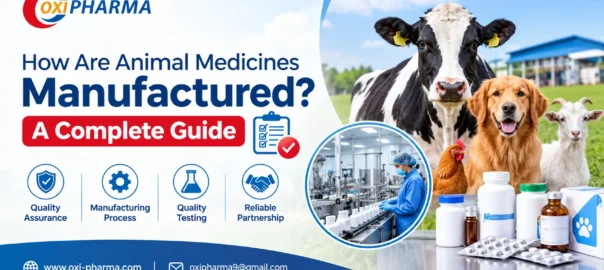
How Are Animal Medicines Manufactured? A Complete Guide

Animal medicines help prevent, treat or control disease in animals. They include antibiotics for infections, dewormers for parasites, painkillers for injured animals, vaccines for herd protection and supplements for recovery and growth. A dog with a skin infection and a dairy cow with mastitis need very different products. Both depend on a medicine that has been made correctly.

Animal medicines manufacturers design the formula, source clean ingredients, test every batch and label each pack so the dose is clear. A weak or contaminated product can fail to cure an animal or, worse, harm it. That is why animal medicine manufacturers must follow the same discipline as companies that make human medicines.

Types of Animal Medicines Manufactured in India

India has a large livestock population and a growing pet care market. Animal drug manufacturers across the country therefore make a wide range of products. Here are the main groups.

Antibiotics and Antibacterial Medicines

Antibiotics treat bacterial infections such as mastitis in cows, respiratory disease in poultry and wound infections in dogs. Common groups include penicillins, tetracyclines and fluoroquinolones. They are made as tablets, injections and powders. Misuse can cause resistance, so these medicines need accurate dosing, clear label warnings and veterinary guidance.

Antiparasitic and Deworming Medicines

Parasites drain an animal’s health from the inside and the outside. Dewormers target roundworms, tapeworms and liver flukes, while other products control ticks, lice and mites. Albendazole, ivermectin and levamisole are widely used.

Veterinary Pain Relief and Anti-Inflammatory Medicines

Injured, lame or post-surgery animals need relief from pain and swelling. Veterinary NSAIDs such as meloxicam and ketoprofen are common choices. Species process these drugs differently, so manufacturers design strengths and forms for cattle, horses or pets rather than copying a human product.

Vaccines and Biological Products

Vaccines protect animals against diseases such as foot and mouth disease, brucellosis and Newcastle disease.

They are biological products, so they need clean rooms, carefully handled cultures and an unbroken cold chain. Making them is more specialised than making a tablet, and fewer plants can do it.

Nutritional Supplements and Feed Additives

Calcium, phosphorus, vitamins, trace minerals, probiotics and liver tonics fill the gaps in daily feed. Dairy farmers use mineral mixtures to support milk yield and bone strength. Poultry units add vitamins and enzymes to feed. These products come as powders, liquids or premixes that blend evenly into feed or water.

Hormonal and Reproductive Health Medicines

These products support breeding, heat management and birth. Oxytocin helps with delivery and milk let-down, while prostaglandins help synchronise heat in herds. Small dose changes can strongly affect the animal. Manufacturers therefore weigh and test these products with extra care.

Step-by-Step Process Followed by Animal Drug Manufacturers

Every reliable veterinary product follows a structured journey from formulation to final dispatch. This guide explains the step-by-step manufacturing process followed by animal medicine manufacturers in India, covering how raw materials are selected, formulations are developed, quality checks are performed, and finished veterinary medicines are packaged and prepared for distribution.

1. Research and Formulation Development

Every product starts as a formula. Scientists choose the active ingredient, the dose per kilogram, the dosage form and the supporting ingredients that hold it together. They also consider the species, since a formula that suits a goat may not suit a horse. Small trial batches test taste, stability and effect before large-scale production begins.

2. Selection of Raw Materials and Active Pharmaceutical Ingredients (APIs)

The active pharmaceutical ingredient, or API, is the part of the medicine that does the work. Manufacturers buy APIs and excipients only from approved suppliers who share test reports with each lot. A trusted source prevents most quality problems later. Cheap, unverified material often leads to failed batches and wasted money.

3. Quality Testing of Raw Materials

The quality control team samples each lot and tests identity, purity, moisture and strength. Approved material receives a label and moves to storage.

4. Weighing and Mixing of Ingredients

Ingredients are weighed to the exact milligram in a controlled area, and a second person checks each weight. Mixing then spreads the active ingredient evenly. Poor mixing is a serious risk, because one tablet could carry too much drug and the next too little. Blenders and homogenisers work to set times and speeds.

5. Manufacturing of Different Dosage Forms

Here the blend becomes a product. Machines compress tablets, fill capsules, prepare liquids and fill sterile vials for injections. Each form has its own rules, whether it is an injection or syrup.

6. Drying, Granulation and Processing

Many powders do not flow or compress well, so they are granulated first. Wet granulation binds the powder into small granules, which are then dried to the right moisture level. Too much moisture shortens shelf life. Too little can make tablets crumble. The granules are then sieved, lubricated and prepared for compression or filling.

7. Quality Control and In-Process Testing

At this stage, the products are tested for hardness, disintegration times, and accurate fill volumes.

8. Packaging and Labelling

Packaging protects the medicine from light, air and moisture. Common choices include blister packs, amber bottles, vials, sachets and large tubs for farm use. The label states the name, strength, batch number, manufacturing and expiry dates, species, dose and storage advice.

9. Final Product Testing and Batch Release

Before dispatch, the finished product is tested again against its approved specification. It must pass for strength, purity, appearance and, where needed, sterility. Only then does the quality head sign the batch release. A failed batch is held back, investigated and never sold.

Different Dosage Forms of Veterinary Medicines

Animal drug manufacturers choose the dosage form based on the species, the disease and how easily the farmer or owner can give the dose. Each form has a clear purpose.

Tablets and Capsules

Tablets and capsules suit pets such as dogs and cats, and some small ruminants. They give a fixed dose in a convenient form. Chewable and flavoured tablets help when animals refuse bitter medicine. Large animals rarely take tablets easily, so these forms are mostly kept for smaller species.

Veterinary Injections

Injections act fast and bypass digestion, which makes them common for serious infections and emergencies. They may be given into a muscle, under the skin or into a vein. They must be sterile and free of particles. That is why injection plants use clean rooms, filtered air and strict gowning rules.

Oral Liquids and Syrups

Liquids are easy to measure by body weight and suit calves, young animals and poultry drinking water. They may be solutions, suspensions or emulsions. Manufacturers add preservatives and flavours, then test pH and stability. Suspensions need shaking, so the label should say so clearly.

Dry Powders and Sachets

Powders are mixed into feed or water, which suits flocks and herds. Sachets hold a single dose, so there is less chance of measuring errors on the farm. They are light to ship and store well when kept dry. Moisture is the main enemy, so sealed packaging matters.

Ointments, Creams and Sprays

Topical products treat wounds, skin infections, fungal patches and maggot infestations. Ointments form a lasting layer on the skin, creams absorb more easily, and sprays reach sore or hairy areas without touch. Manufacturers check texture, spreadability and microbial limits so the product is safe on broken skin.

Boluses and Feed Supplements

Boluses are large tablets given to cattle, buffalo and horses. They release the drug slowly or deliver a large dose at once. Feed supplements, including premixes and mineral blends, are made to mix evenly into daily rations. Even mixing is the key test, because no animal should receive more than its share.

Quality Control and Safety Standards Followed by Third Party Animal Medicine Manufacturer

Quality is not a final check at the factory gate. It is built into every stage. Good animal drug manufacturers treat testing, cleaning and record-keeping as part of daily work.

Importance of Good Manufacturing Practices (GMP)

Good Manufacturing Practices, or GMP, are the rules for how a plant is built, cleaned, run and documented. In India, plants follow Revised Schedule M, and many also hold WHO-GMP certification. GMP covers staff training, equipment, water quality, hygiene and records. Without these rules, a plant cannot promise consistent products.

Testing for Purity, Strength and Stability

Laboratories confirm that each product holds the stated amount of drug, no harmful impurities and the right physical qualities. Stability studies keep samples in heat and humidity for months to see how they age. The results decide the shelf life printed on the pack.

Microbiological Testing

Microbiological tests look for bacteria, yeast and mould. Oral liquids and creams have set limits for microbial counts. Injections must be fully sterile and tested for endotoxins. Production water is checked often, since it is a common source of contamination.

Prevention of Cross-Contamination

When a plant makes several products, traces of one can slip into another. This is a major worry with hormones and antibiotics. Plants prevent it with separate rooms, air filters, written cleaning procedures, line clearance checks between batches and, for sensitive products, dedicated equipment.

Maintaining Proper Storage Conditions

Materials are stored by status: quarantine, approved or rejected. Temperature and humidity are recorded daily. Vaccines and some injections need cold storage from factory to farm. Stock follows a first-expiry, first-out rule so older batches leave the warehouse first.

How Do Third Party Veterinary Medicine Manufacturers Ensure Animal Medicines Are Safe and Effective?

Dosage Accuracy for Different Animal Species

A dose that suits a 5 kg dog would do nothing for a 500 kg cow. Doses are set per kilogram of body weight and tested for each species. Manufacturers print dosing charts on the pack and use measuring cups, dosing syringes or pre-weighed sachets to cut errors. Some drugs that are safe in one species harm another, so species labelling is essential.

Checking Drug Stability and Shelf Life

Shelf life is proven, not guessed. Long-term and accelerated studies show how strength, colour, pH and impurities change over time.

Preventing Contamination During Production

Production areas are cleaned between batches and swab-tested.

Proper Labelling and Storage Instructions

A good label helps the farmer and the vet use the product safely. It lists the species, dose, route, warnings, withdrawal period, batch number and expiry date.

Oxi Pharma: A Reliable Veterinary Third Party Manufacturing Company in India

Oxi Pharma is a third-party veterinary medicine manufacturer with more than 22 years of experience and WHO-GMP certification.

Among the animal medicine manufacturers in India today, a company with this much history is worth a close look. As a veterinary third-party manufacturing company, Oxi Pharma works with brands that want quality products without setting up their own plant. To discuss products, order sizes and packaging, contact us at +91-9548355063.

Conclusion: Understanding the Animal Medicine Manufacturing Process

Making an animal medicine takes far more than mixing and filling. It starts with a sound formula, moves through tested raw materials, controlled mixing, careful dosage form production and repeated quality checks, and ends with accurate labels and a signed batch release. Each step protects the animal, the farmer and the consumer.

Strong animal drug manufacturers earn trust through consistent results and open records. If you plan to launch a veterinary range, choose a third-party veterinary medicine manufacturer that follows GMP, tests every batch and explains its process clearly. Animal medicine manufacturers who meet these standards give you products you can stand behind.

Frequently Asked Questions

What are animal medicines?

They are products that prevent, treat or control disease in animals. They include antibiotics, dewormers, vaccines, painkillers and nutritional supplements.

How are animal medicines manufactured?

Manufacturers develop a formula, test raw materials, weigh and mix ingredients, make the dosage form, test it, pack it and release it only after final approval.

What is an API?

API stands for active pharmaceutical ingredient. It is the part of the medicine that produces the effect on the disease.

What is a withdrawal period?

It is the time to wait after treatment before milk, meat, or eggs can be used. It keeps drug residues out of food.

How are injections kept sterile?

Plants use clean rooms, filtered air, gowned staff, sterilised equipment and filtration steps. Each batch is tested for sterility.

What is cross-contamination?

It is the transfer of traces from one product to another. Separate rooms, air filters and cleaning checks prevent it.

What is a batch record?

It is a file that lists ingredient lots, weights, settings, test results and signatures for one batch. It allows full traceability.

What should I check before choosing a manufacturer?

Check licences, WHO-GMP status, laboratory facilities, product range, batch records, minimum order size and client references.

Why does packaging matter for animal medicines?

Good packaging shields the product from light, air and moisture. It also keeps the label clear, which supports correct dosing.